
5 Rock Bands Whose Merch is More Famous Than Their Music
Let's be real for a second. You've seen it. We've all seen it.
Someone walks past you on the high street wearing a Ramones t-shirt, and you think, "Nice, a fellow fan." So you hit them with a casual "Hey, what's your favourite Ramones track?" And they look at you like you've just asked them to solve a quadratic equation.
"Oh, I don't really listen to them. I just like the shirt."
Ouch.
But here's the thing, this isn't a crime. It's not even that controversial anymore. Some bands have created imagery so iconic, so visually powerful, that their logos have completely transcended the music. They've become fashion statements, cultural symbols, and wardrobe staples for people who couldn't name a single song.
So let's celebrate (and gently roast) five rock bands whose merch has become arguably more famous than their actual music. No judgement here. Okay, maybe a little judgement.
1. The Ramones – The Original Merch Kings
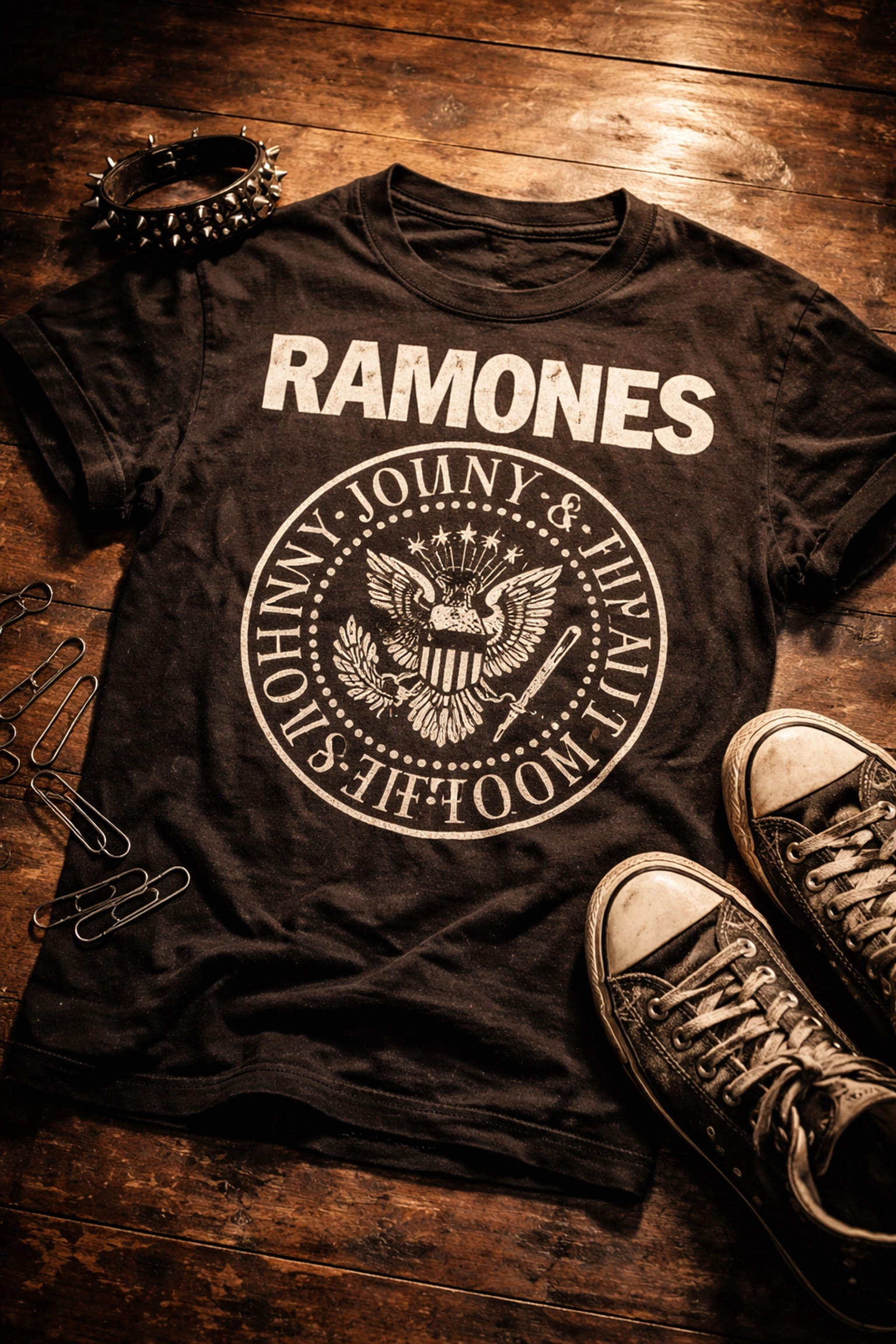
If there's a Mount Rushmore of band merch, the Ramones Presidential Seal logo is carved right at the top. You know the one, the bald eagle clutching a baseball bat, the names Johnny, Joey, Dee Dee, and Tommy circling around it. It's clean, it's punk, and it's absolutely everywhere.
Here's a wild stat for you: The Ramones sold more t-shirts than records. Let that sink in. One of the most influential punk bands of all time, pioneers of a whole genre, and more people own their merch than have ever actually pressed play on "Blitzkrieg Bop."
The logo was designed by Arturo Vega, the band's creative director, back in 1976. He based it on the Presidential Seal as a tongue-in-cheek nod to American iconography. Little did he know he was creating one of the most recognisable pieces of band imagery in history.
These days, you'll find the Ramones logo on everything from high-end fashion runways to budget supermarket racks. It's been co-opted by people who think "Sheena Is a Punk Rocker" is a statement about someone called Sheena who happens to enjoy punk rock (which, to be fair, it kind of is).
But hey, if wearing the shirt gets even one person curious enough to check out the music? That's a win.
2. Nirvana – The Smiley Face That Conquered the World
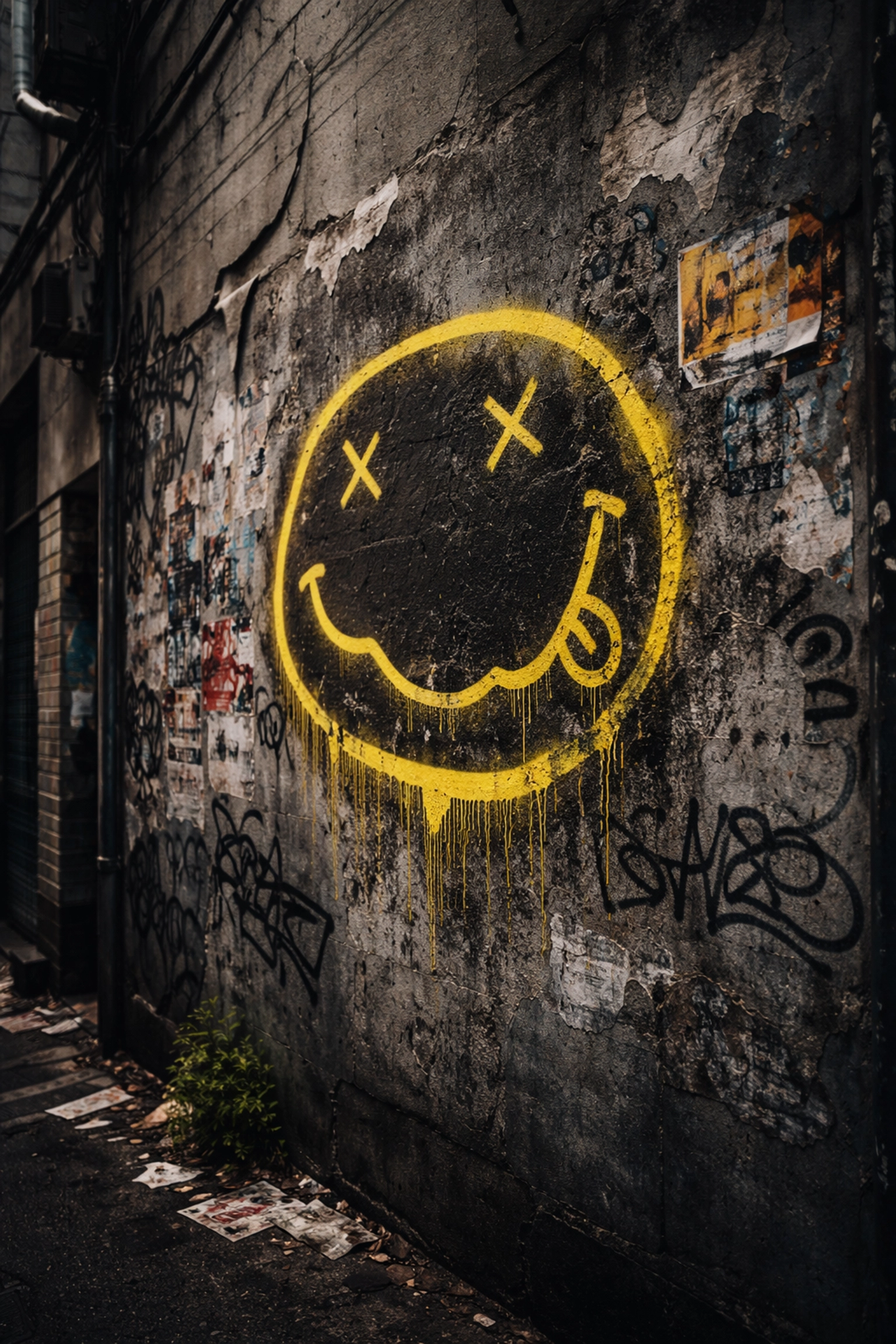
You don't even need to say the band name. Just picture it: a wobbly yellow smiley face with crossed-out eyes and a squiggly tongue. That's it. That's the whole thing.
Kurt Cobain reportedly sketched this logo himself, and it first appeared on flyers for the Nevermind album release party in 1991. Since then, it's become one of the most bootlegged, replicated, and worn band logos on the planet.
What makes the Nirvana smiley so genius is its simplicity. It's weird, it's a bit unsettling, and it perfectly captures the band's whole vibe, grunge, irreverence, and a healthy dose of not caring what anyone thinks.
But here's where it gets interesting. A huge chunk of people wearing Nirvana merch today weren't even born when Kurt Cobain was alive. They've grown up seeing the logo on Instagram, in vintage shops, and on influencers who pair it with designer jeans and pristine white trainers. The aesthetic has become completely detached from the music for a lot of wearers.
Does that matter? Honestly, probably not. The logo represents something, a feeling, an attitude, an era. And if people connect with that visually, who's to say that's less valid than connecting with "Smells Like Teen Spirit"?
(Though seriously, go listen to "Smells Like Teen Spirit." It still absolutely slaps.)
3. The Rolling Stones – Lips That Launched a Thousand Tees
Alright, this one's a bit different. The Rolling Stones are genuinely one of the biggest bands in history. They've sold hundreds of millions of records. Mick Jagger is a knight, for crying out loud.
But even with all that success, there's an argument that their iconic "Tongue and Lips" logo has taken on a life of its own.
Designed by John Pasche in 1970 (he was paid just £50 for it: imagine that conversation with your accountant), the logo was inspired by Mick Jagger's famously large lips and the Hindu goddess Kali. It's bold, it's cheeky, and it's been plastered on everything from baby onesies to luxury handbags.
The Stones logo has become a universal symbol of rock and roll rebellion. You don't need to know "Paint It Black" or "Sympathy for the Devil" to understand what that tongue represents. It's attitude. It's swagger. It's "I'm a bit rock and roll, actually."
And because the band has been around for over six decades, there are now multiple generations wearing the merch. Your nan might have a vintage Stones tee from 1975. Your little cousin might have picked one up from Urban Outfitters last week. Same logo, completely different relationship with the music.
4. The Misfits – The Skull That Ate Pop Culture
Now we're getting into truly wild territory. The Misfits are a horror punk band from New Jersey who were active in the late '70s and early '80s before breaking up, reuniting, breaking up again, and generally causing chaos.
Their music is brilliant: fast, loud, and gloriously campy. But let's be honest: at least half the people walking around in Misfits t-shirts have never heard a single Misfits song.
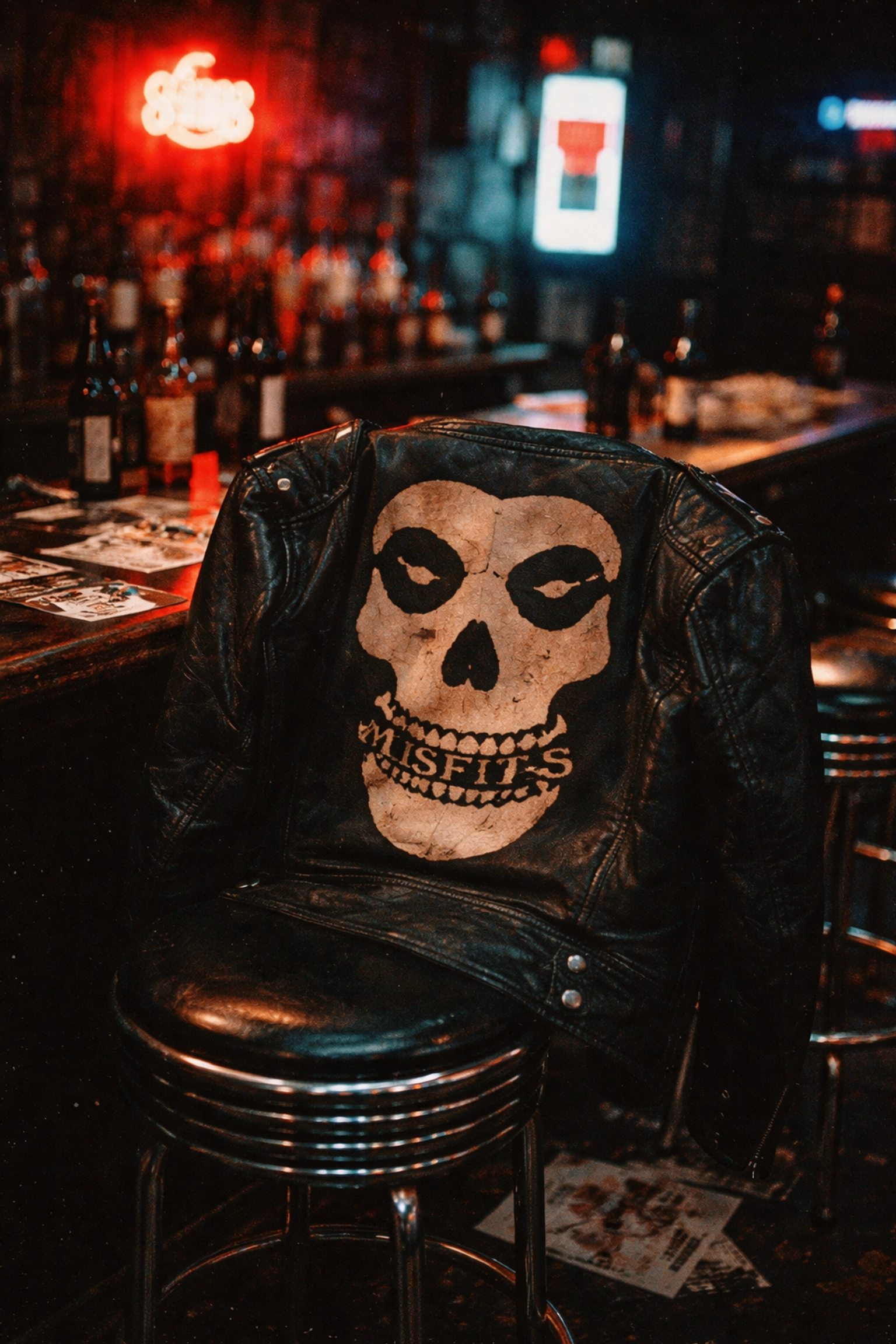
The culprit? The Crimson Ghost skull logo. It's based on a character from a 1946 movie serial, and it's become one of the most recognisable images in punk and beyond. The stark black and white design, the menacing grin: it just looks cool. Really, really cool.
The Misfits logo has appeared on everything from skateboards to phone cases to high fashion collaborations. It's been worn by celebrities who almost certainly couldn't name the band members. It's become a symbol of edginess without any of the context.
And honestly? The band seems pretty okay with it. Merch sales have kept the Misfits brand alive and thriving, even during periods when they weren't actively making music. The skull pays the bills.
5. Joy Division – The Album Cover That Became a Lifestyle
This one's a bit meta. Joy Division, the legendary post-punk band from Manchester, never actually sold official merchandise. Frontman Ian Curtis and the rest of the band were philosophically opposed to self-promotion: they thought it was "the work of the devil," according to bassist Peter Hook.
And yet, their Unknown Pleasures album cover: those white pulsar waves on a black background: has become one of the most reproduced images in music history.

The design, created by Peter Saville, shows radio waves from a pulsar (a type of neutron star). It's stark, it's beautiful, and it looks incredible on a t-shirt. Which is why you'll find it absolutely everywhere, often worn by people who have no idea it's connected to a band at all.
There's something poetic about this. A band that refused to sell merch has inadvertently created one of the most popular merch designs ever. The image has been bootlegged endlessly, and it's become a symbol of cool, understated taste.
If you're wearing an Unknown Pleasures shirt, you're either a devoted Joy Division fan or someone who just appreciates good graphic design. Either way, you look great.
The Bottom Line
Here's the thing: none of this is really a problem. Band merch becoming fashion isn't killing music. If anything, it's keeping these artists relevant and introducing new generations to incredible sounds.
So whether you're a die-hard fan who can recite every lyric or someone who just thinks the logo looks sick: wear what you love.
And if you want to grab some officially licensed gear from any of these bands (and actually support the artists), Rock Universe has got you covered. Real merch. Real quality. No judgement if you can't name the drummer.